

A mechanical marvel in miniature
Some time ago, I was asked by the Museum curator to choose from the VMM artifacts collection, a single item which I favored the most to be displayed in a special exhibit dedicated to the 60th Anniversary of the VMM. This was a very difficult task, not only because of the large number of artifacts but also because of the high quality and historical relevance of many.
As a professional model engineer my first choice went for the builder’s model of the second Empress of Japan, a magnificent piece of work built in 1929 which illustrates so well the times when the ship and the model as well where built not only for the sake of efficiency but also as a work of art. Definitely my number one choice, but looking at the sheer size of the model in its display case, she is 11’ long by 8’ high and weighing somewhere of 2000LBs give or take, I started to have some doubts about the feasibility of moving such a heavy and fragile object for the temporary exhibit. Therefore, I decided to change my choice with an equal spectacular model but way smaller. This is the model of a working steam engine. A triple expansion steam engine used in the last decade of the 19th Century to power a new class of ships called torpedo boat destroyer or later as this class of ships evolved, were named destroyer.
These engines reached the peak of their development with the use in these destroyers where they were pushed to the limits of mechanical capabilities by the high demands in power, speed, endurance and fuel economy expected from this new class of warship.
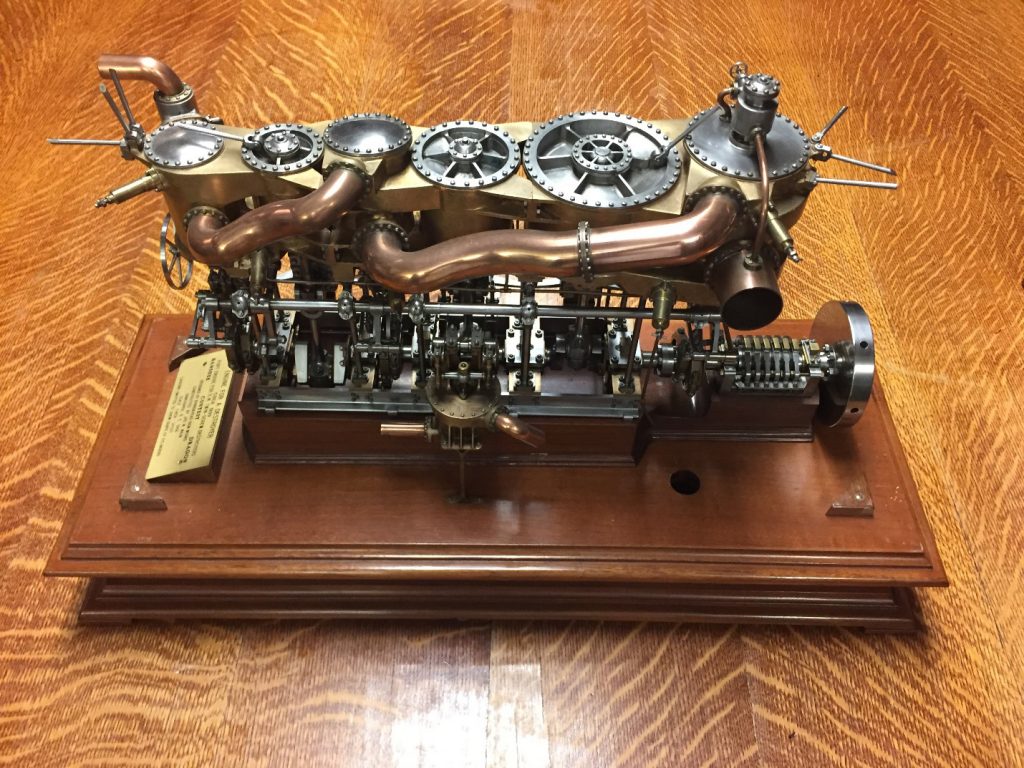
By the turn of the last Century these types of engines were the apogee of steam technology and were rendered obsolescent almost overnight by the development of Parsons turbine. Most destroyers were equipped with two engines although there were a few designs which employed three engines driving three propellers. Our model represents one of two engines installed in the destroyers HMS Banshee, HMS Contest and HMS Dragon, built by Birkenhead Iron Works. They were 27 knotters of the 1893-1894 Royal Navy programme ordered 7 February 1894 and delivered by July 1895.

I don’t want to get into too many details about these vessels, some of them served throughout WW1 but most were scraped within 10 to 15 years due to a high replacement cost of their locomotive type boilers. However, their engines were saved and put to good use either in different ships or used as stationary engines in various shops.
The model we illustrate here in this article was made by Mr. Jas M. Main of Vancouver in 1966 and is based on original detailed drawings from 1894. The engine is 1:12 (1” -1’) scale, is fully functional and I estimate to be comprised from about 2500 individual parts all scratch built to the highest level of quality. Cylinders block is cast in bronze with steel cylinder heads and copper exhaust pipes, crankshaft as well as connecting rods are polished steel with all bearings made from bronze. This engine is a reversing type which means has a special mechanism enabling the engine to reverse its rotation in a very short time with no need of an expensive and heavy transmission.
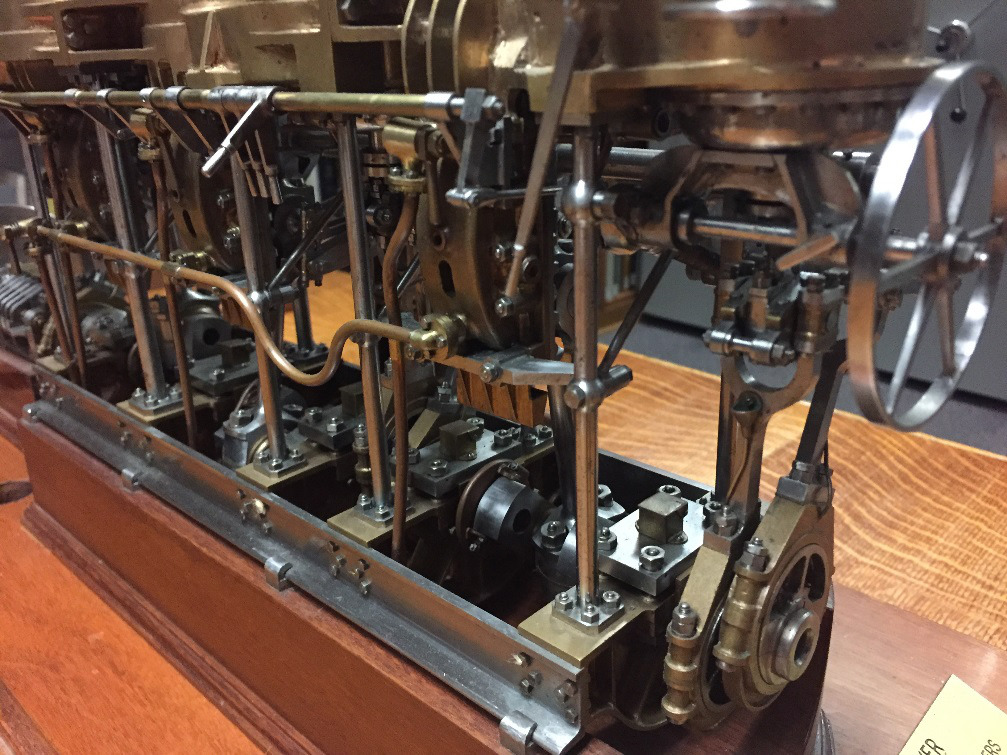
The nice polished steel wheel at the front of the engine is the main steam throttle which allows admission of high-pressure steam from the boiler in the first cylinder. After mechanical work was performed the remaining steam was exhausted into the second cylinder at reduced pressure repeating the same process into the third cylinder hence the name triple expansion engines. This process was very successful in increasing the efficiency of marine steam engines.

Here is the flywheel with the main thrust bearing all perfectly recreated with brass oilers and bronze bearings all being assembled with a myriad of nuts and bolts in all sizes. Note the two bronze eccentric and rod which are part of the reversing mechanism.
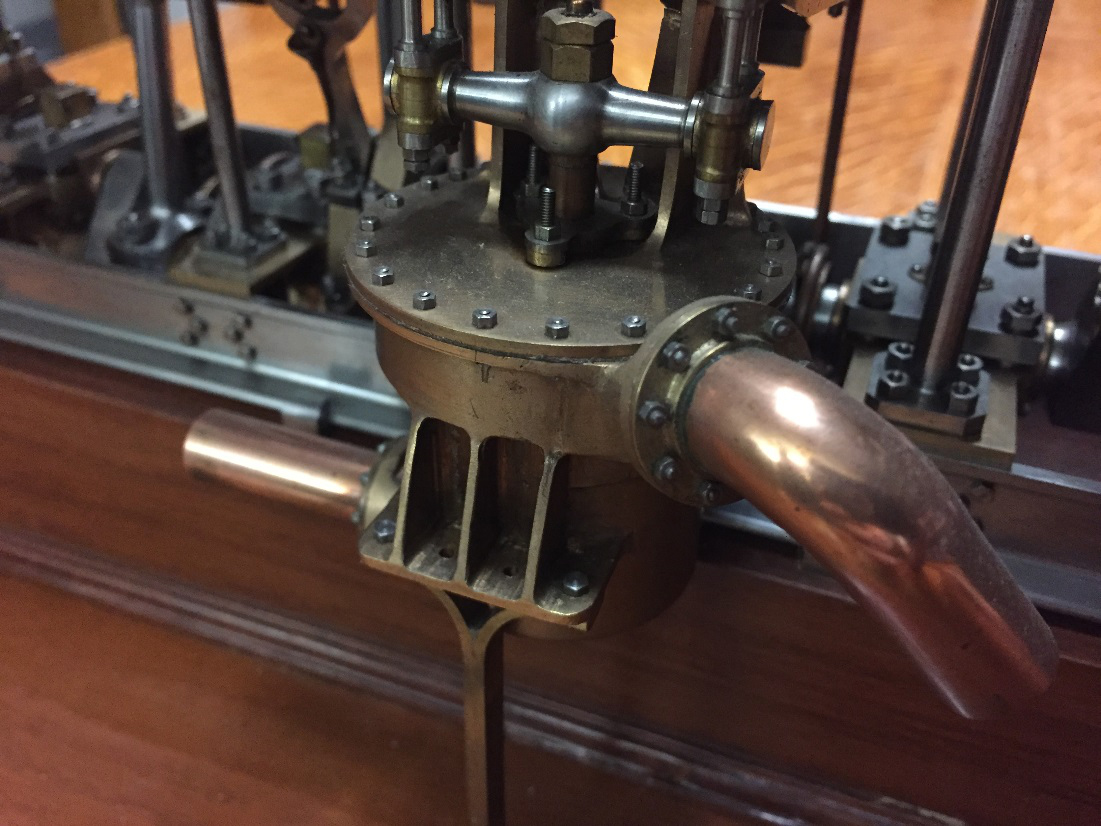
This is the main raw water pump which was activated by the engine. Note the intricate bronze casting as well the cleanliness of the entire work.
As I said at the beginning of this article, this model is not only an accurate representation of a technological marvel but in my view is a work of art made by a person with a lot of skill in engineering work, patience and determination which deserves to be put in spotlight to serve as inspiration for the young generation.